The Differences Between Marble and Travertine
Published:
Both stones originate from limestone, but their formation, their texture and the applications in which they perform best are different.
Formation
Marble is a metamorphic rock formed when limestone recrystallizes underground under high heat and pressure. Travertine, on the other hand, is a sedimentary rock formed when calcium carbonate carried by hot springs is deposited at the surface.
Texture and appearance
Marble has a dense crystalline structure; when polished it gives a mirror gloss, and its veins are pronounced. Travertine has natural pores in its structure; these pores can be left open, or filled and then polished.
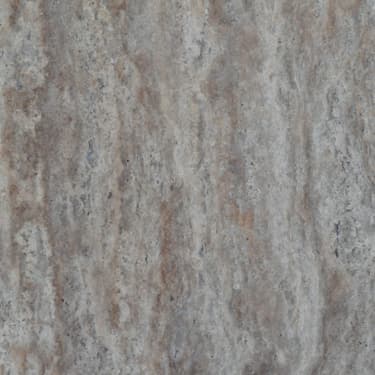
When a travertine block is cut perpendicular to the vein (vein-cut), a straight-lined pattern emerges; when it is cut parallel to the vein (cross-cut), a cloudy pattern emerges.
Which stone for which project?
Polished marble is preferred for interiors such as lobbies, bathrooms and wall cladding. Tumbled, brushed or sandblasted travertine, thanks to its non-slip surface, is frequently used for pool surrounds, terraces and exterior façades.
When deciding, look at the stone's water absorption and compressive strength values; you can find these values on each stone's page in the catalog.